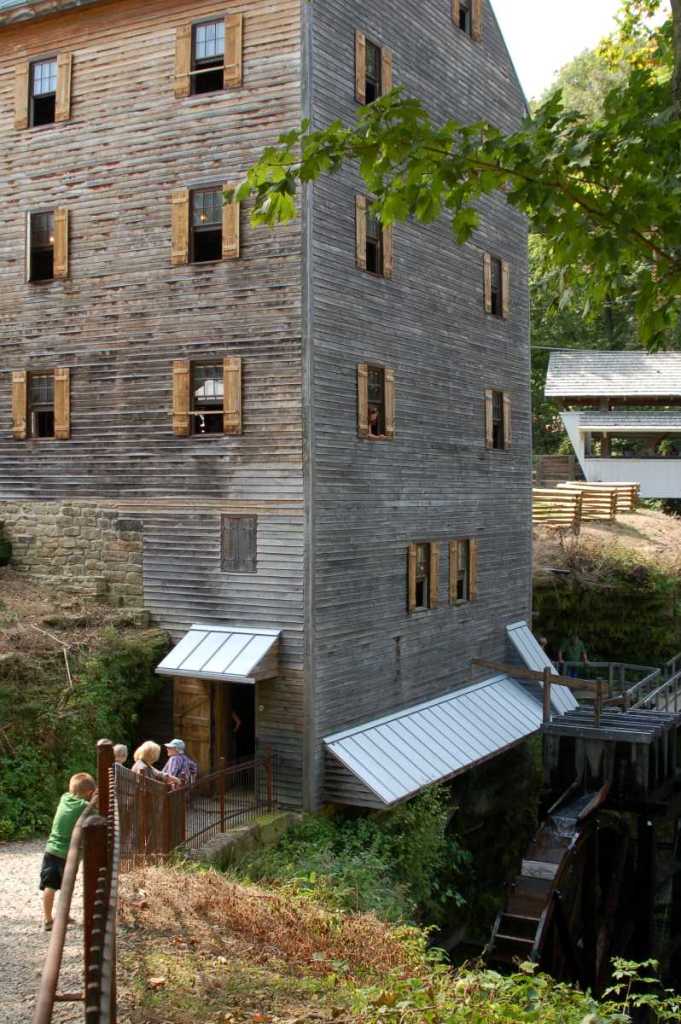
Visitors watch Rock Mill’s waterwheel turn in the gorge below. Rock Mill Covered Bridge is in the background. (Credit: Ken Drenten)
By Ken Drenten
Rock Mill is the story of not merely one mill, but actually three. It’s also the story of a dedicated effort to save a treasured piece of history.
The original mill was built in 1799 by Joseph Loveland and Hezekiah Smith. The mill, which led to development of a general store, tannery, tavern and distillery, prospered until 1820, when it fell into the Hocking River gorge upon which it was built.
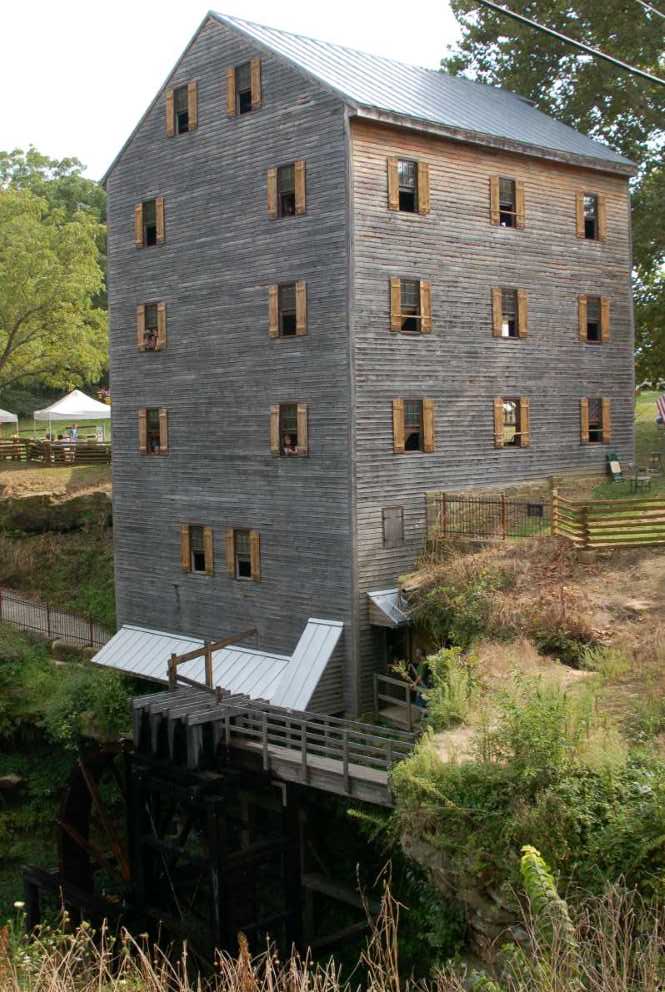
James Brook built a second mill in 1820, which was destroyed by flood just two years later. Christian Morehart bought the property and built the current 5-1/2 story high mill in 1824. The oak-beamed mill rests on two sandstone ledges in such a way that parts of its milling components are actually underground.
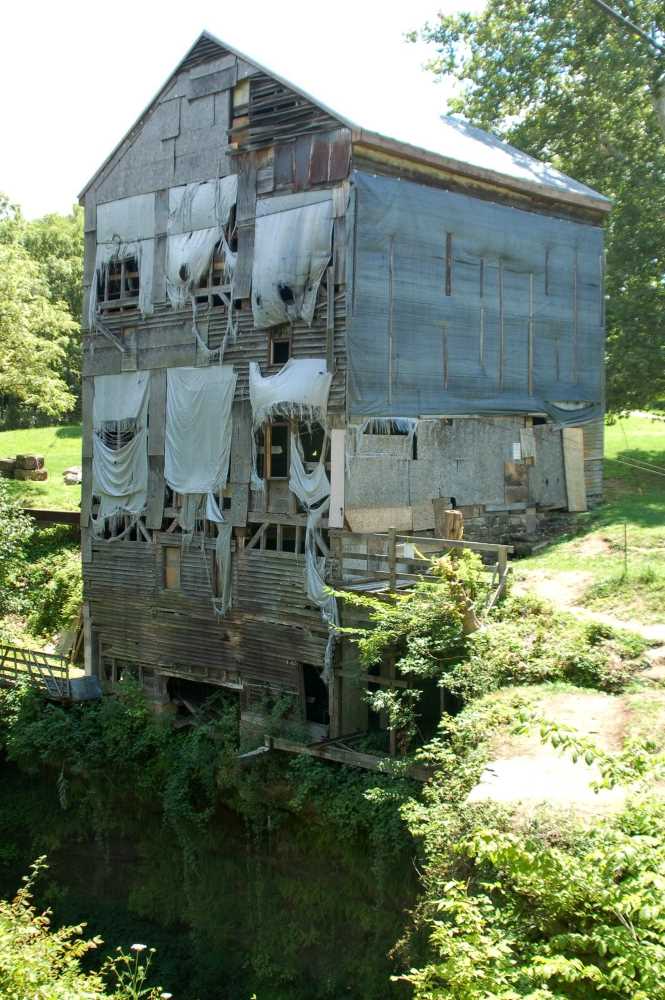
The mill, used for grinding flour and cornmeal, passed through a number of owners until it finally sat vacant for nearly a century. In 1994, the Stebelton family purchased the mill and began work to stabilize the structure so it would not suffer the same fate as the first two mills.
In 2003, the Stebelton family donated the property to the Fairfield County Parks District, which initiated a years-long process to completely rebuild and renovate the mill. The crowning piece was a 26-foot wooden waterwheel built by craftsmen in Virginia and installed in 2012.
The mill began grinding grain once again in 2017, with people from all over the United States coming to see it come back to life.
Stebelton Park at Rock Mill, 1429 Rockmill Place NW (just off Lithopolis Road), Lancaster, is open year-round; the mill is open seasonally for tours, special events and programs.
Ken Drenten is creator and editor of Dusty-Tires.com, a travel blog for out-of-the-ordinary places in Ohio.
Subscribe to Dusty Tires and receive a weekly email with the latest blog article. It’s free and ad-free!
All rights reserved, copyright Dusty Tires (dusty-tires.com), 2024.


 Dusty Tires
Leave a reply to Kathy Wolfe Cancel reply