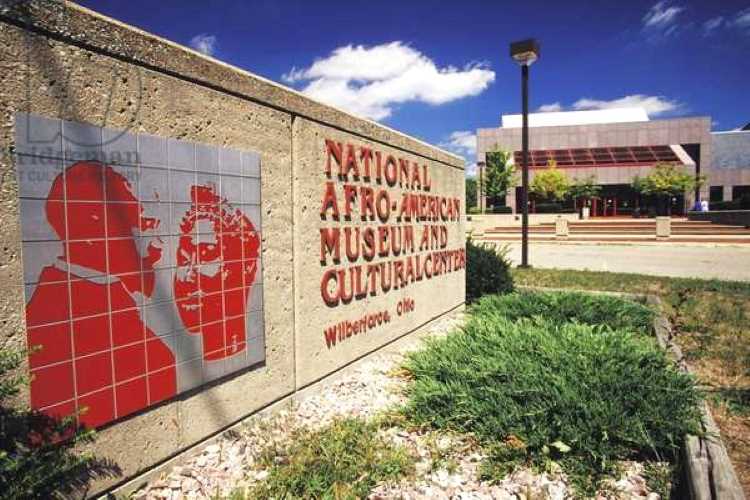
The National Afro-American Museum and Cultural Center in Wilberforce. (Credit: NAACC)
By Ken Drenten
February is Black History Month, and sites relating to Ohio’s rich Black historical heritage are plentiful in the state. Now is a great time to visit some of these places. A good place to start is the National Afro-American Museum and Cultural Center in Wilberforce.
The museum is the permanent home of one of the nation’s largest collections of Afro-American materials, with over 9,000 artifacts and artwork, 350 manuscript collections, and thousands of photographs. Items in the museum’s collection include Alex Haley’s typewriter and his final draft of Roots, a buffalo hide coat worn by a Buffalo Soldier, Gregory Hines’s tap shoes, and artifacts representing the Black Arts Movement of the 1960s.
Located a short distance away from the Ohio River, which was a major step toward freedom for escaping slaves prior to the Civil War, is the National Underground Railroad Museum and Freedom Center in Cincinnati. The museum, rooted in the stories of the Underground Railroad, strives to illuminate the true meaning of inclusive freedom by presenting permanent and special exhibits that inspire, public programming that provoke dialogue and action, and educational resources that equip modern abolitionists.
Another place of interest in Cincinnati is the Harriet Beecher Stowe House. The house, a recognized site on the Underground Railroad, is the place where Stowe lived during her formative years that later led her to write the best-selling novel Uncle Tom’s Cabin. Learn about the author, the Beecher and Stowe families, the Underground Railroad and the women’s rights movements of the 1830s–1860s.
There are many other important sites in Ohio to learn about and become connected with Black history, including the Underground Railroad Museum in Flushing; the John Rankin House in Ripley; and the Paul Lawrence Dunbar House in Dayton.
Artwork by treasured Columbus artist Aminah Robinson (1940-2015) is on display at the Columbus Metropolitan Library, Columbus Museum of Art, and the King Arts Complex in Columbus. The Columbus Museum of Art also displays works by beloved Columbus artist and woodcarver Elijah Pierce (1892-1984).
See also this previous post about Black historical sites in Ohio.
Subscribe to Dusty Tires and receive a weekly email with the latest blog article. It’s free and ad-free!
Ken Drenten is creator and manager of Dusty-Tires.com, a travel blog for out-of-the-ordinary places in Ohio.
All rights reserved, copyright Dusty Tires (dusty-tires.com), 2024.


 Dusty Tires
Leave a comment